Background
As AI became part of my daily design workflow, I noticed a recurring problem: every new project required rebuilding the same context around our company, products, users, and design principles. This made research repetitive, time-consuming, and sometimes inconsistent. I initiated the AI Research Hub to turn our existing knowledge into a shared foundation for AI-assisted research - helping the team work faster and approach new challenges with a more complete understanding of the product.
The Challenge
Making AI research more contextual and consistent
The challenge wasn't simply organizing information. I wanted to create a research workflow that could understand our product ecosystem, bring together different professional perspectives, and reduce the manual work required to start each project. At the same time, the system needed to support my decision-making, not replace it. AI would gather, analyze, and organize information, while I remained responsible for evaluating the findings and making the final product and design decisions.
Shared Knowledge
Giving AI the context behind our products
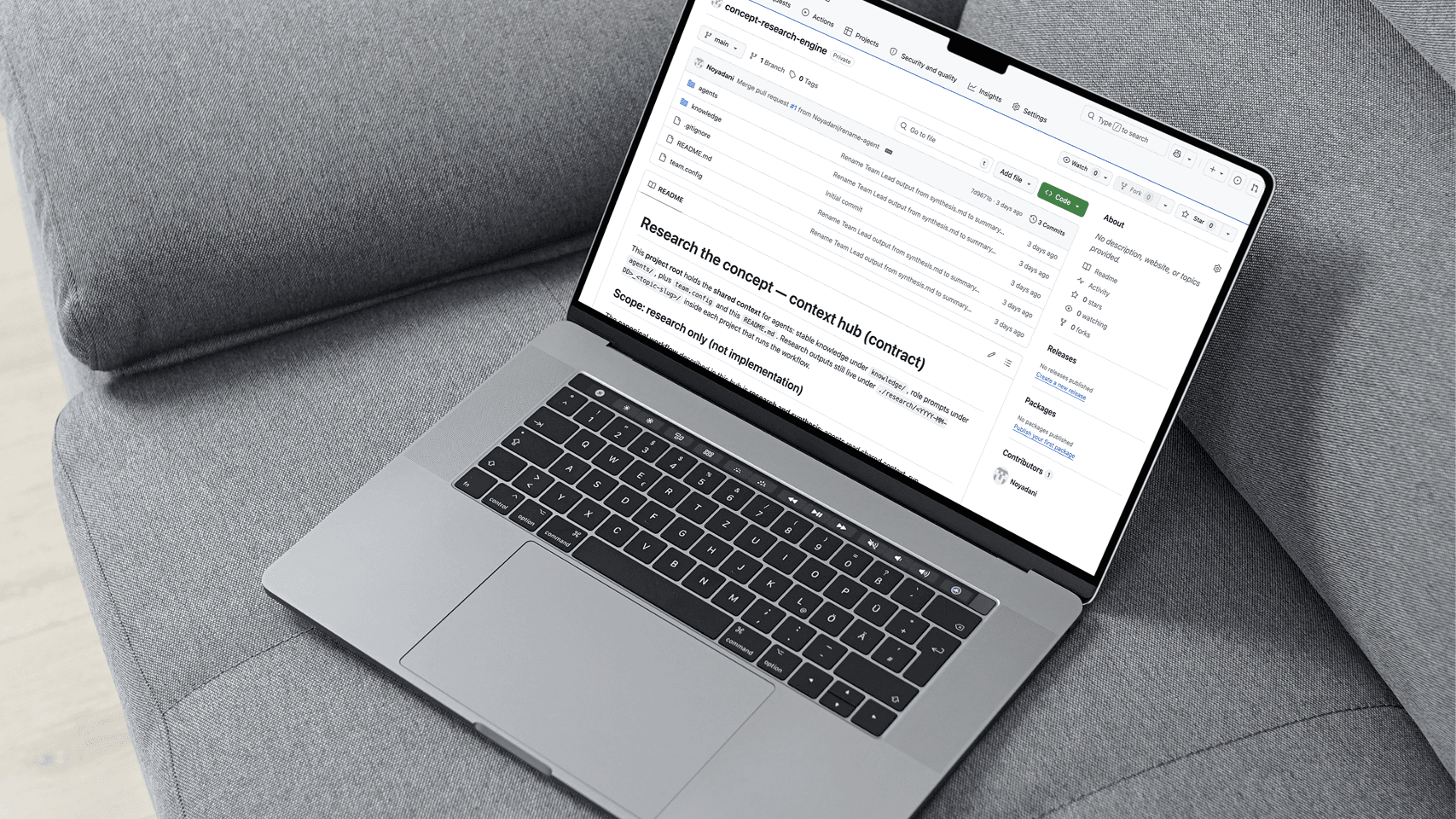
I built a centralized knowledge base containing our business goals, product documentation, user research, surveys, competitor insights, and design system guidelines. I also documented our repository structure and coding conventions so technical recommendations could account for how our products were actually built. Rather than repeatedly explaining this context to different AI tools, I organized it into structured Markdown files, with README documentation to help agents navigate the information efficiently. This created a shared foundation that could be reused across projects and kept research grounded in our existing product knowledge.
Multi-Agent Workflow
Bringing different perspectives into one research process
I identified the areas where I most often needed input during product development - product management, UX, UI, and engineering - and designed a specialized agent for each. Each agent had its own responsibilities and could be used independently for focused questions. For broader research tasks, I could trigger the full workflow, allowing the agents to investigate different aspects of the problem in parallel. A Team Lead agent then consolidated their findings into a structured report, bringing product, design, and technical considerations together. This helped me identify trade-offs earlier and evaluate recommendations from multiple perspectives without manually coordinating separate research processes. I defined the agents' instructions and workflow using ChatGPT, then organized and ran the system through Cursor using Markdown-based configuration files. The workflow ran on demand, giving me control over when and how research was initiated.
Impact
From a personal workflow to a shared team resource
What started as a tool I built to improve my own workflow gradually became a shared resource for other designers on the team. By working from the same product knowledge and bringing together different professional perspectives, we could approach new challenges with more context and spend less time gathering and organizing information from scratch. I used the system across multiple projects, including the AI Product Creation Workflow, where it supported the early research and product definition stages. Beyond saving time, the hub helped us maintain a more consistent understanding of our products, users, and technical constraints - while keeping professional judgment at the center of the process.